Project Type:
Remediation through excavation and extraction of free-phase fuel in the saturated subsurface using a continuous-loop oleophilic belt system, complemented by a mobilization system through targeted pumping. Effluent water treatment via settling and phase separation.
Conceptual Framework:
- Industrial scrap recycling site contaminated due to historical storage of fuel in underground tanks. Main contaminants: free-phase fuel.
Remediation through selective excavation:
- Preliminary geotechnical characterization. Determination of soil bearing capacity.
- Preliminary soil characterization. Horizontal and vertical delineation of contamination.
- Determination of soil management pathways.
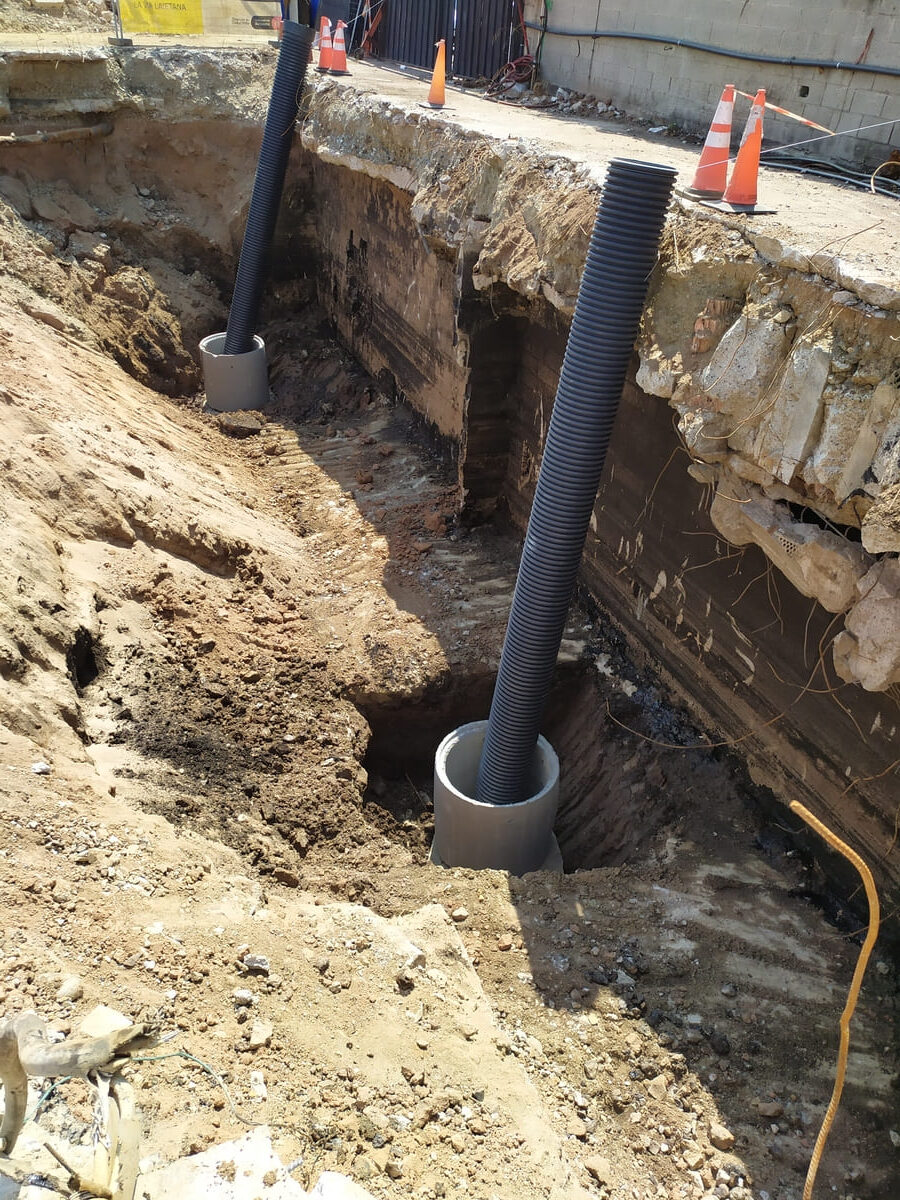
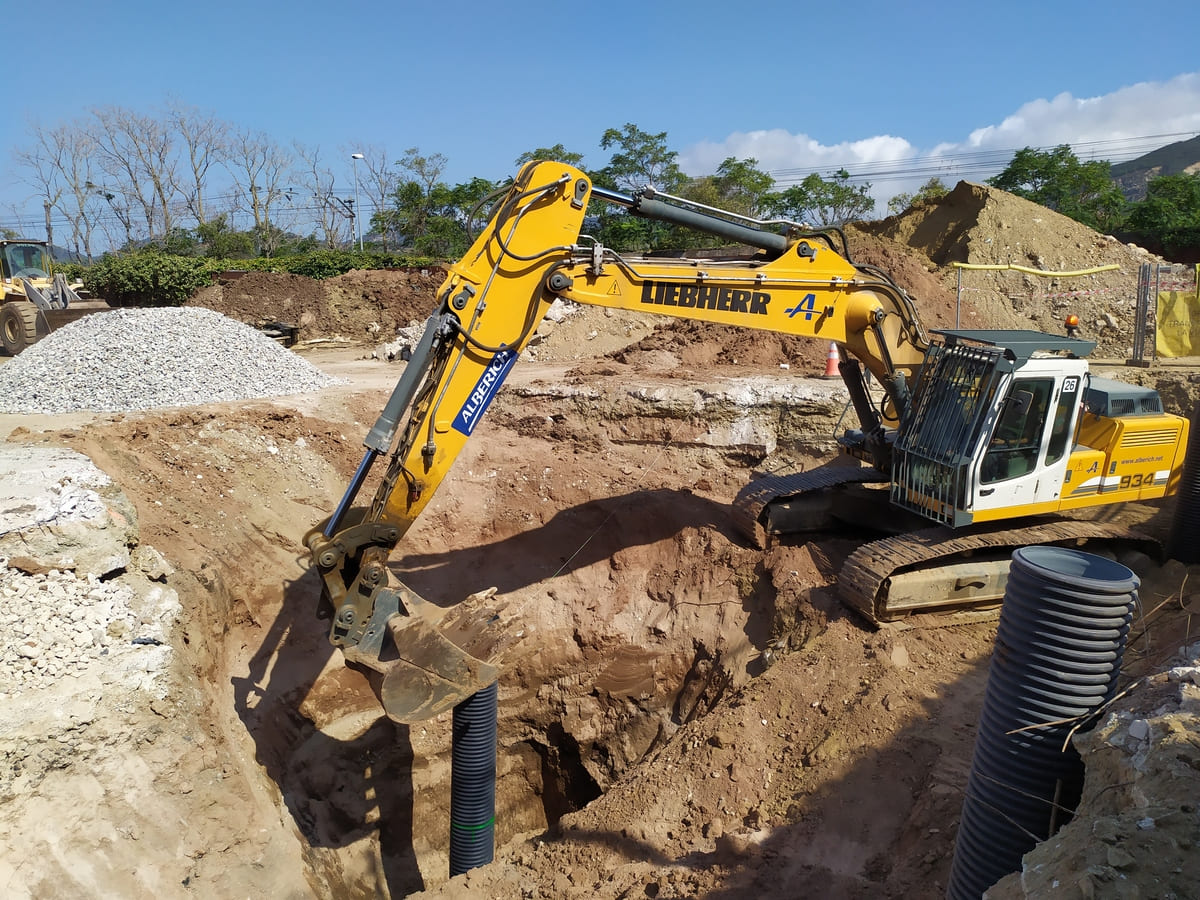
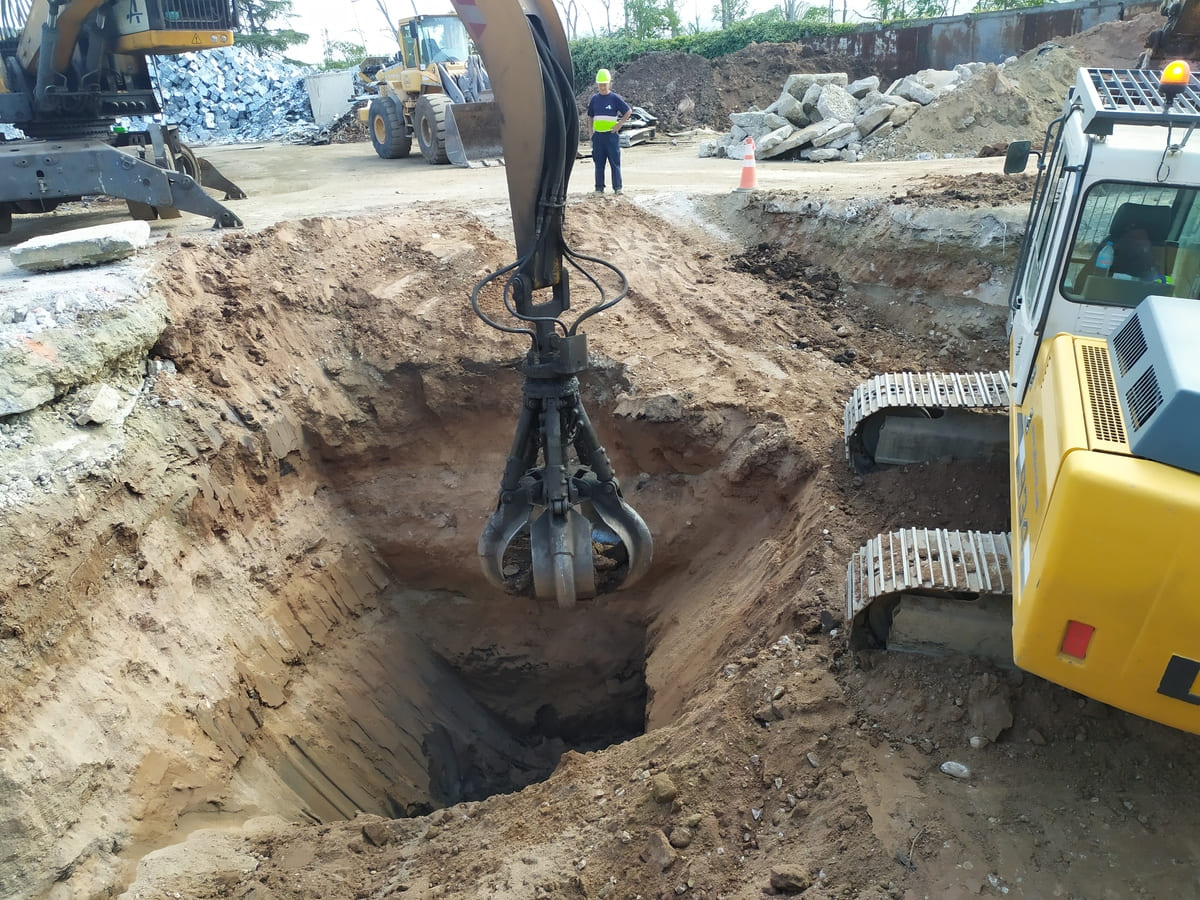
- Selective excavation.
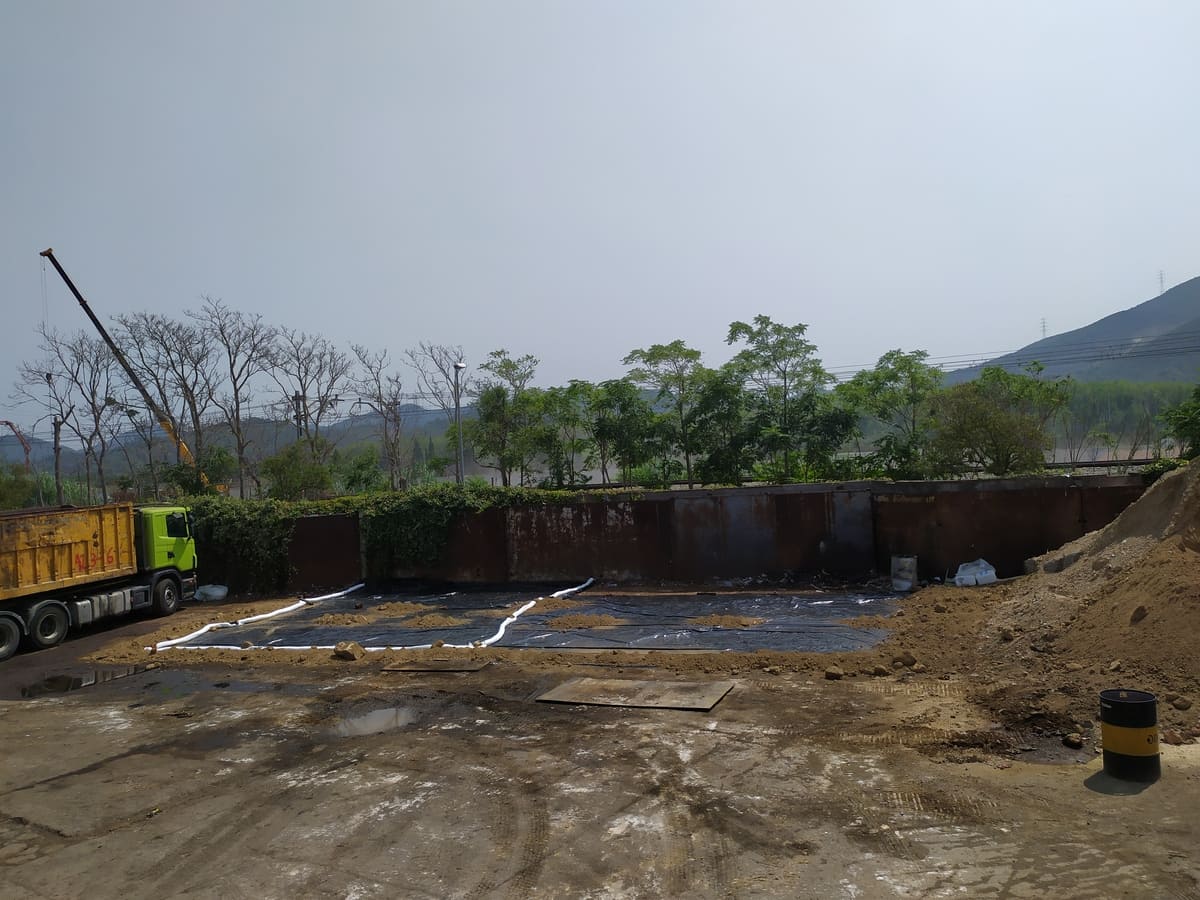
- Temporary soil stockpiling.
- Disposal in Class II and III landfills.
- Verification of remaining soils.
- Backfilling using reused soils from the site and imported clean fill.
Saturated zone remediation using Abanaki system + Pump & Treat (P&T):
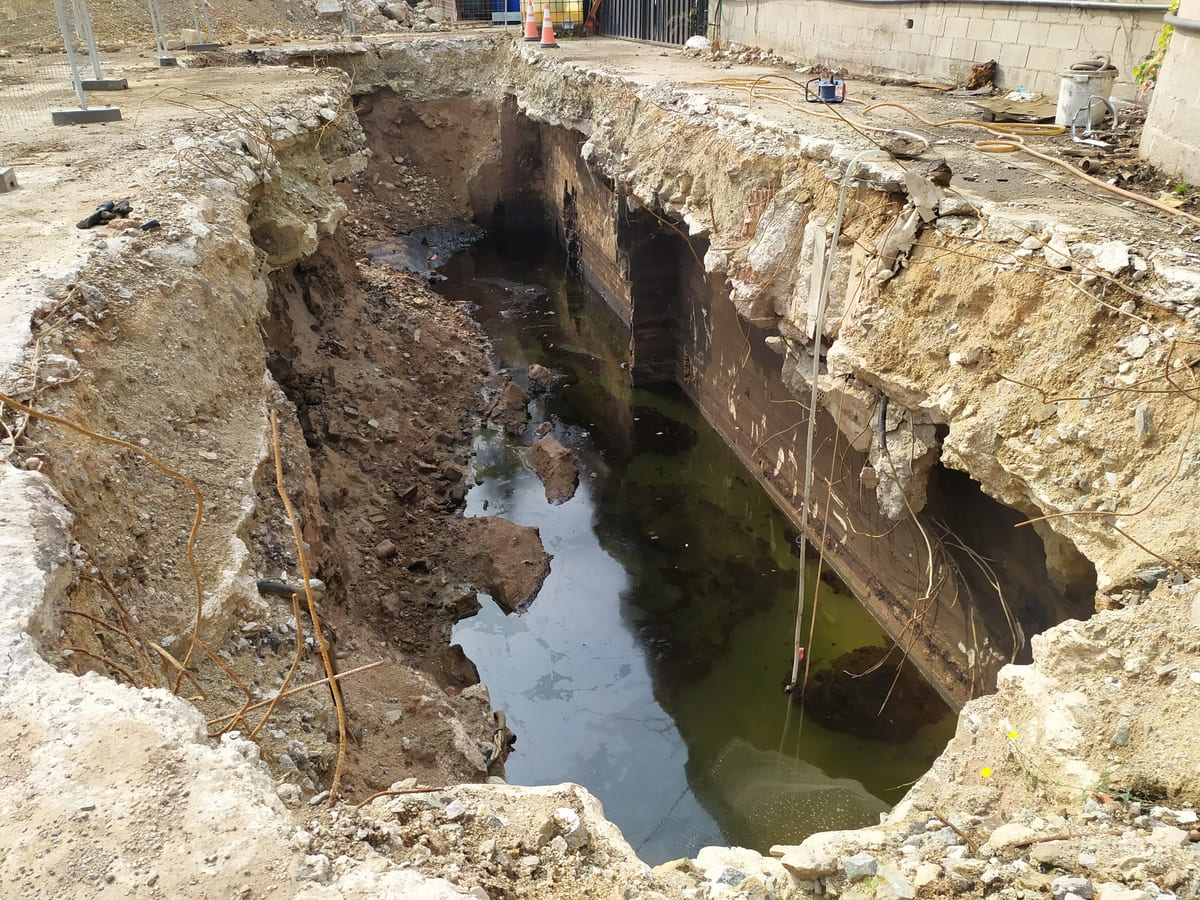
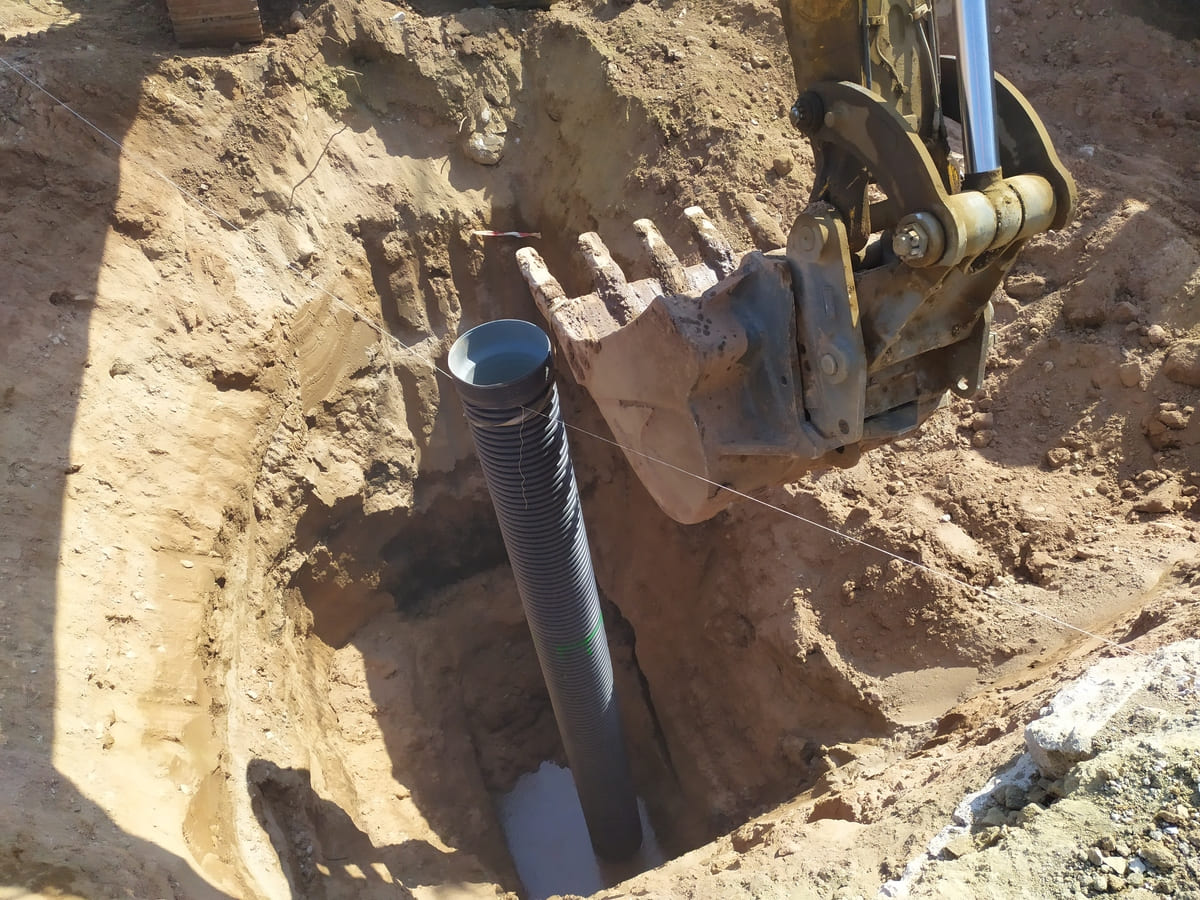
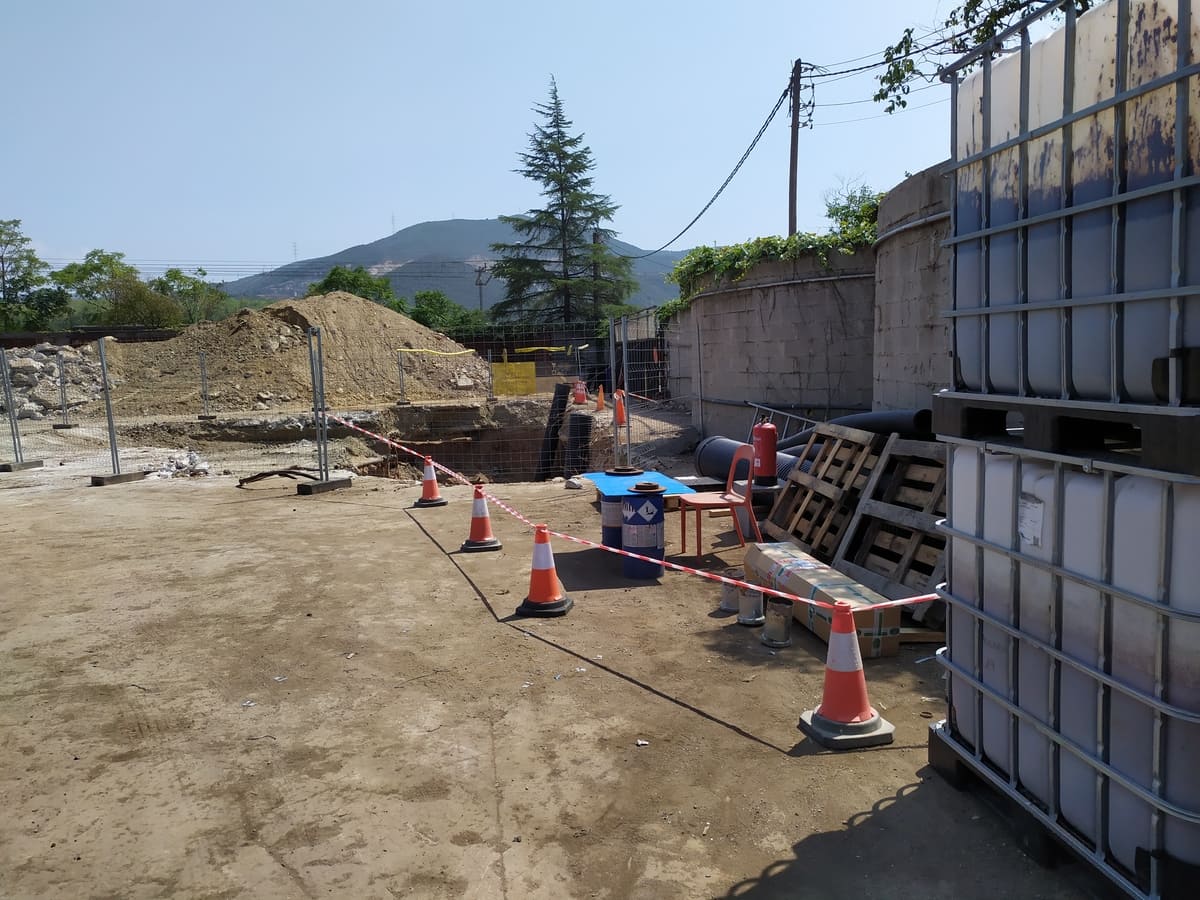
- Free-phase fuel extraction in a large-diameter (250 mm) monitoring well using a continuous-loop oleophilic belt.
- Mobilization of surrounding contamination to reduce lateral plume spread via targeted electric pumping.
- Generation of capture cones.
- Effluent water treated through settling and phase separation.
Objective:
Elimination of primary and secondary sources through removal of underground tanks and, primarily, contaminated soils. Secondary objective: removal of free-phase floating fuel in the saturated zone.
Key Data:
- Excavation area: 165 m²
Volume of excavated soil:
- Clean soil: 0 m³
- Recovered/valorized soil: 165 m³
- Class III managed soil: 15 m³
- Total managed soil: 180 m³
Managed tonnage:
- Recovered: 278 tons
- Class III: 25 tons
- Volume of treated water: 15 m³
- Volume of fuel removed: 1.3 m³