Conceptual Framework
This project addresses the decontamination of an area of over 11,000 m², affected by hydrocarbons in both soil and groundwater.
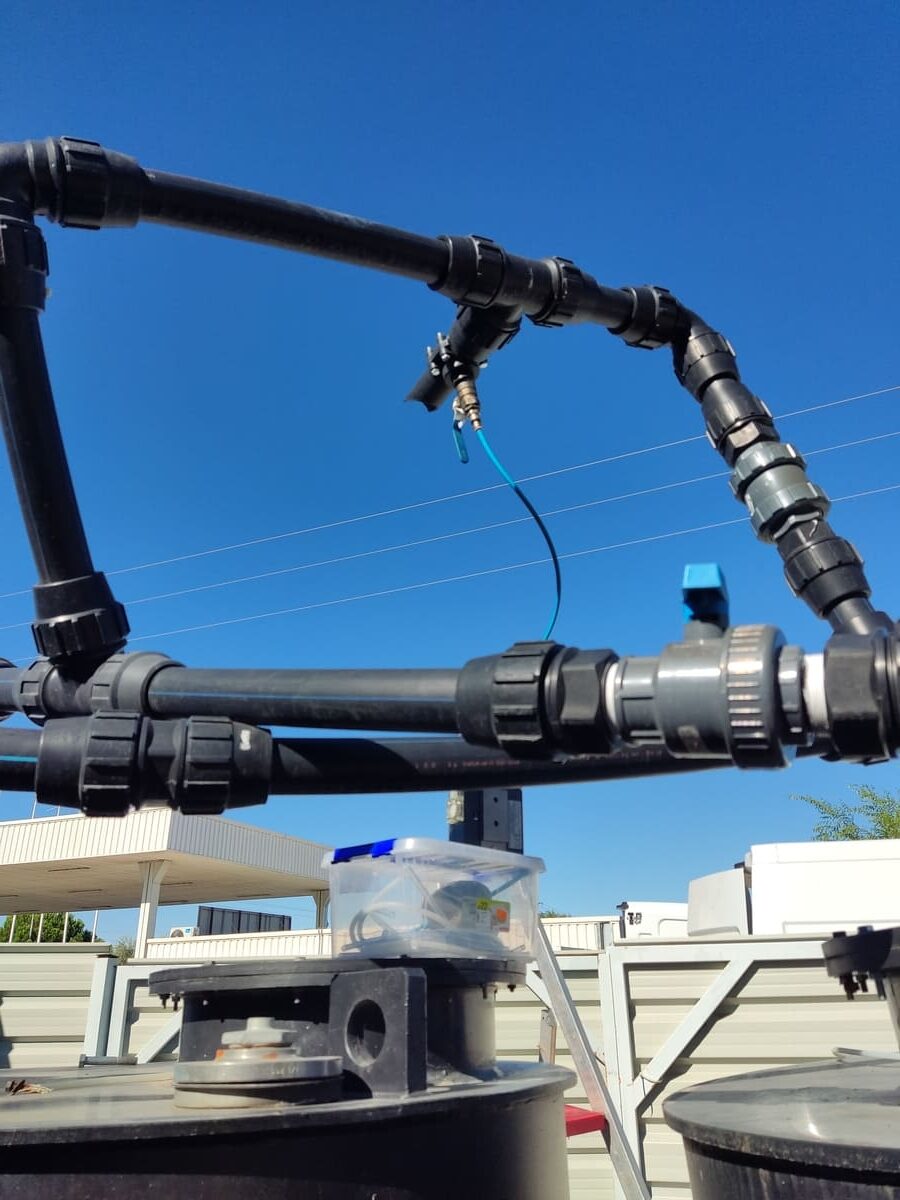
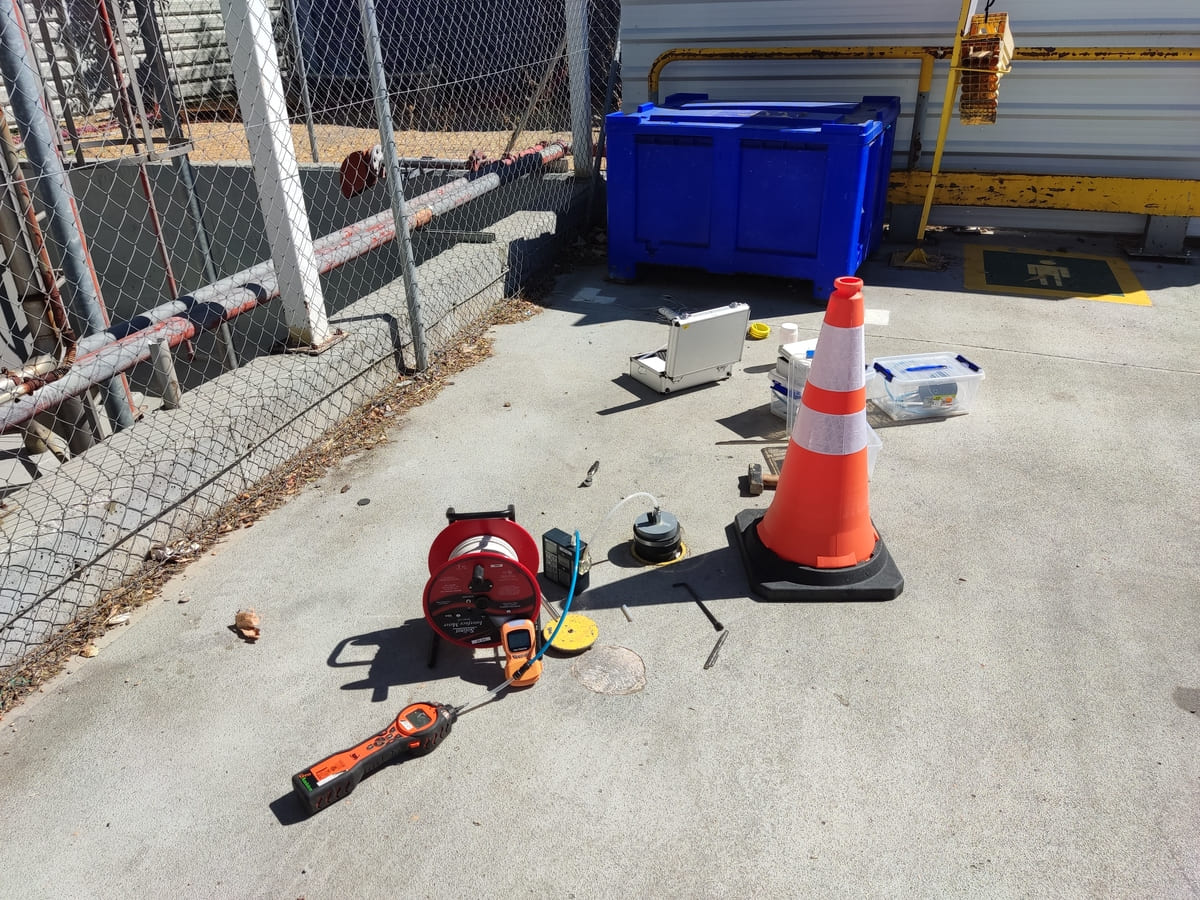
To achieve effective remediation, a multi-technique treatment is implemented, combining different decontamination methods to optimize the environmental improvement of the subsurface.
Applied Remediation Techniques
1. Multi-Phase Extraction (MPE) under High Vacuum
- Allows simultaneous extraction of free phase, volatile compounds, and contaminated water.
- Acts on different subsurface zones:
- Unsaturated zone (upper): Contaminant aspiration.
- Capillary fringe: Removal of retained hydrocarbons.
- Saturated zone (lower): Recovery of free and dissolved phase.
2. Air Sparging
- Injection of air into the groundwater to:
- Enhance the volatilization of dissolved hydrocarbons.
- Oxygenate the water, promoting natural biodegradation.
3. Biostimulation
- Acceleration of biological contaminant degradation through the injection of:
- Treated water.
- Specific nutrients.
- Oxygen-releasing agents to stimulate bacterial activity in the subsurface.
4. Hydraulic Barriers
- Creation of a depression in the water table to:
- Control contaminant migration.
- Extract hydrocarbons in both free and dissolved phases.
Contaminant to Treat
The main contaminant present in the soil and groundwater is a hydrocarbon solvent. This compound belongs to the hydrocarbon family and is found in different states:
- Free phase: Accumulated on the surface of the groundwater.
- Dissolved phase: Mixed with groundwater.
- Adsorbed in the soil: Retained within subsurface pores.
This type of contaminant poses a significant environmental risk, affecting water quality and the stability of the underground ecosystem.
Final Objective
Implement a combined strategy to achieve the effective reduction of contamination, optimizing efficiency and the remediation timeline for the affected subsurface.